
How Dewulf Group is getting a grip on A.I. and Copilot with a governance project
A.I. governance and Power Platform governance for an international machine builder.
- Services
- Consultancy
- Platform
- Workshop · Microsoft Copilot · Microsoft Power Platform · Copilot Studio

Project Overview
Who is Dewulf Group?
Dewulf Group is a Belgian machine builder for the potato and root crop sector. The company develops and manufactures machines for tillage, planting, harvesting, storage, sorting and transport. Dewulf is a family business with a long history, has sites in Belgium, the Netherlands and Romania, and employs a few hundred people. Head office is in Roeselare.
The company works heavily within the Microsoft ecosystem. Employees started building their own apps, flows and agents and experimenting with A.I. tools. That brought speed, but the ground rules around it hadn't been set yet.
The challenge
"How do we roll out A.I. and Copilot broadly without losing control?"
Dewulf wanted three things. Keep the speed, because the industry doesn't stand still. Manage the risks, like data ending up outside the organization or costs running away unnoticed. And a clear roadmap, so the next steps happen in the right order.
Project Delivery
The approach
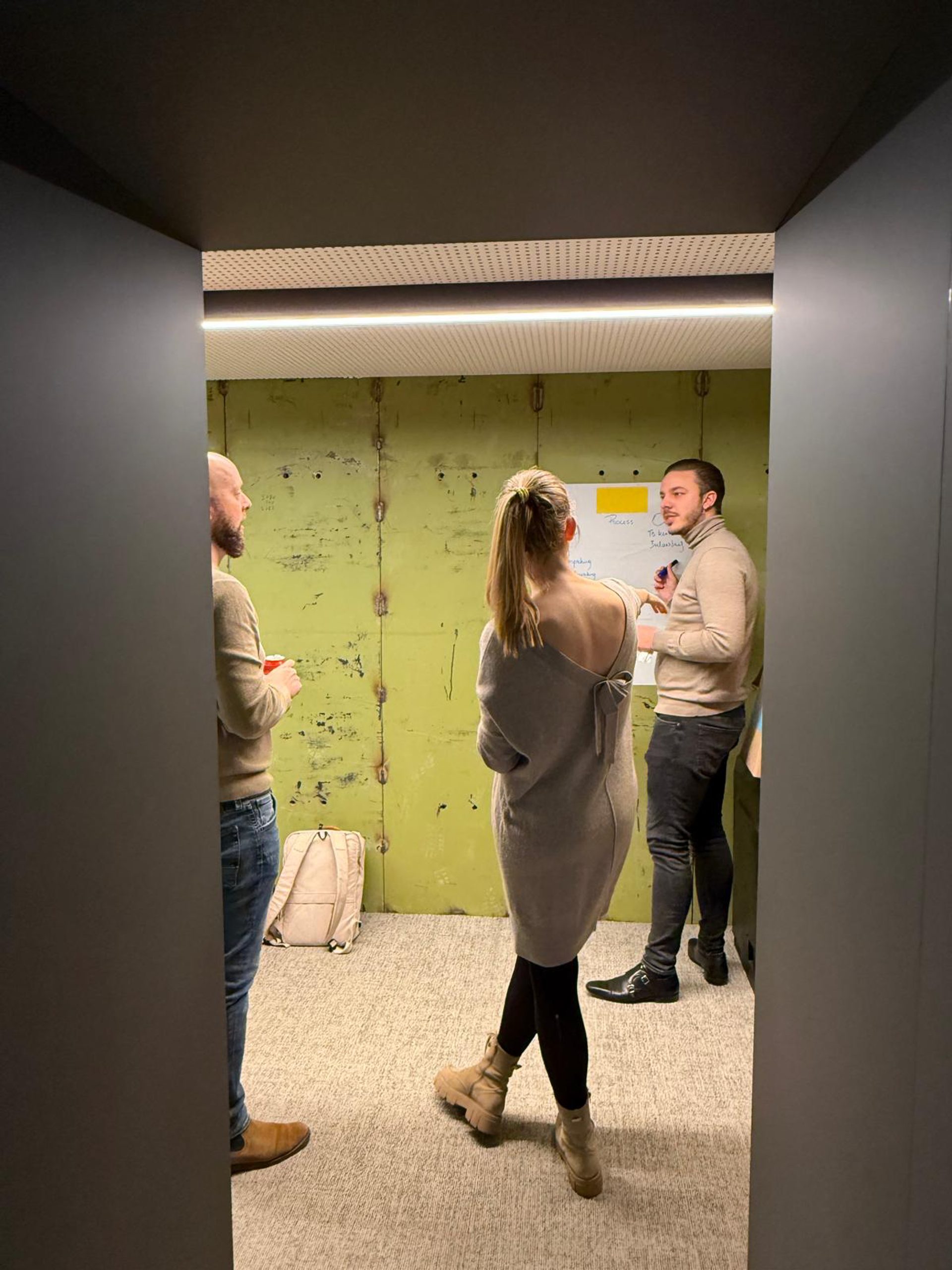
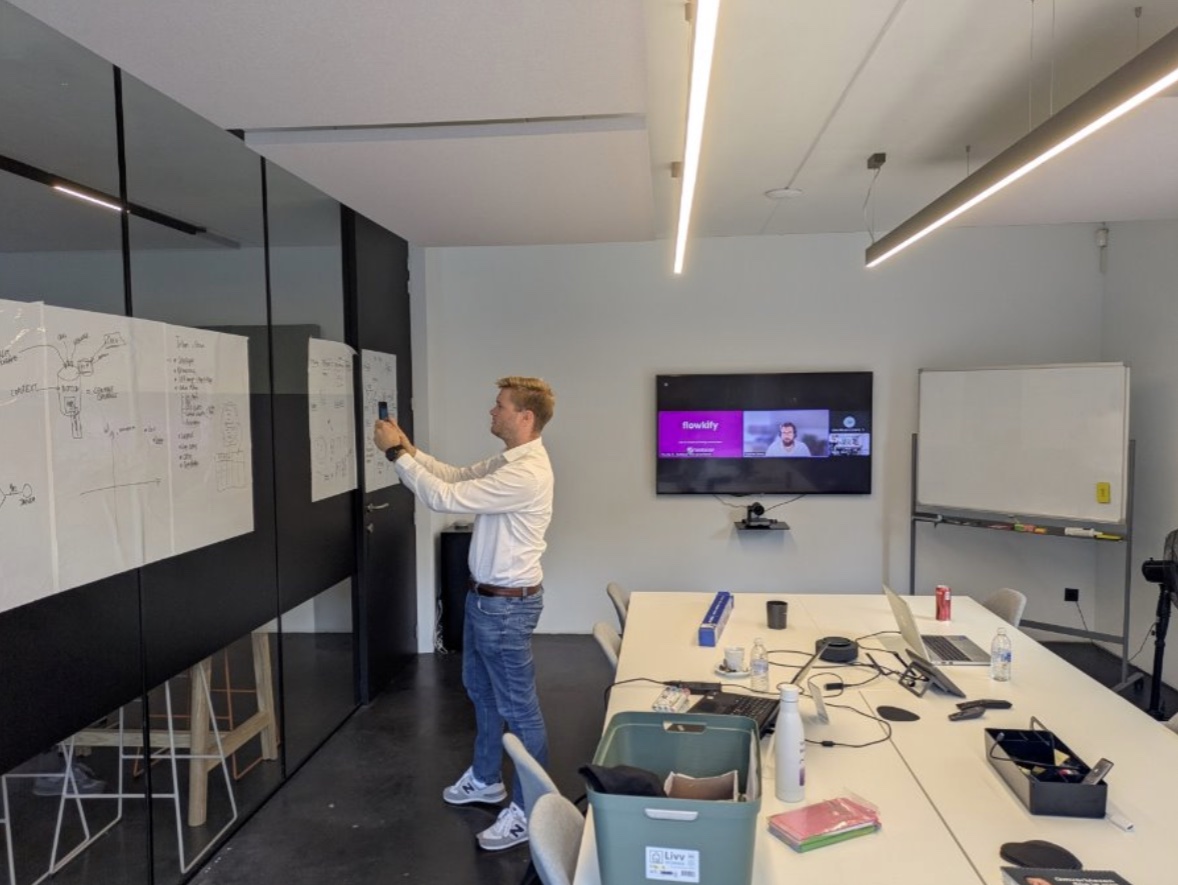
We started with governance coaching in a workshop format. Our A.I. architect walked management, the IT lead and the infrastructure lead through a governance playbook built on eight pillars: foundations, strategy and ownership, environments and application lifecycle, citizen development and classification, change management and adoption, visibility and cost, tooling and tenant setup, and the roadmap.
The goal of that first session wasn't to lock everything down. It was to build one shared picture, name the key choices and risks, and set priorities. To us, governance isn't a thick document nobody reads — it's the balance between innovation and risk, worked out in policy, processes and people.
What we delivered
1. A zone model for A.I. and self-build
A simple division into three zones. Green for personal productivity, where employees are free to experiment. Orange for team solutions, which get registered and fall under light governance. Red for business-critical applications, where IT owns them and work runs through development, test and production. Each zone has its own rules around data, connectors, sharing and ownership.
The benefit: employees see at a glance what's allowed, without wading through a long policy document.
2. An environment and security strategy
A proposal for how to structure the Power Platform environments, with a separate environment for personal productivity and dedicated environments for critical applications. On top of that, a policy on connectors and data loss prevention, with an impact analysis before anything gets locked down.
The benefit: new solutions land in the right place from the start. Moving them later is far more expensive than setting it up right the first time.
3. An A.I. policy and an intake process
A short, visual policy that sets out which tools are allowed and where which data may be used. Alongside it, a light intake process: anyone with an idea answers a few questions about what data they'll use, how big the impact is, and who will use the solution. Based on that, IT triages it into the right zone.
The benefit: IT knows what's happening before something goes into production, and the business gets support, licenses and reuse of existing solutions in return.
4. Roles, responsibilities and roadmap
Five governance roles to assign: strategy, community, administration, architecture and support. Plus a roadmap in four phases. Assess, to map what's already running today. Safeguard, for policy, environments and cost control. Adopt, for training, communication and champions. Operate, to track usage, cost and ownership.
Technology and platform
We worked with Microsoft 365 Copilot, Microsoft Power Platform, Copilot Studio and the Microsoft admin centers. Dewulf runs fully on the Microsoft stack, and that choice gives the best combination of manageability, monitoring and European data storage. Where other models add value, we set out the conditions under which they may be used.
Results
After the first session, Dewulf has a shared picture of what governance means for them and where the biggest risks sit. The eight pillars have been checked against reality, the three risk zones are on the table, the five roles are assigned, and the roadmap runs in four clear phases. The team now knows which steps come first: the environment structure, the A.I. policy and the intake process.
The project continues. We work together structurally as coach and accountability partner, with follow-up sessions where we settle questions per theme and turn the backlog into something concrete. Dewulf keeps ownership in its own hands. We bring the experience of other organizations, so no dependency builds up.
Want to roll out A.I. broadly without losing control? Get in touch with Flowkify for a tailored governance scan.
Ready to build your case?
Tell us where it's clunky. We'll design the flow and build it, often live within a few weeks.
No-obligation call · reply within 24 hours
Other cases
More work that delivered results.
 How Meraki went from A.I. trainings to a prioritized A.I. roadmapFrom A.I. training to a prioritized A.I. roadmap for an accounting and advisory firm.View cases
 How Expliciet automates meeting notes with an A.I. notetakerAutomatic meeting reports in SharePoint for a marketing agency with 40 employees.View cases
 How Conversal made a well-founded choice on which A.I. copilot moves the agency forwardFrom a broad list of ideas to one fully worked-out copilot concept, with a business case and a buy-versus-build analysis.View cases


